Seek & Find

Google
 
Showing posts with label animal science. Show all posts

Saturday, November 7, 2009

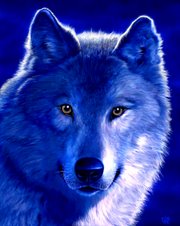
Wolves, Dogs And Mankind


Did We Domesticate Dogs, or Did Dogs Domesticate Us?

A new book by two-time Pulitzer Prize-winning science journalist Jon Franklin concludes that man's best friends may have been responsible for our emergence as the alpha dogs of the animal kingdom.

We wouldn't be who we are without them. So we rewarded them with a lifetime supply of Snausages and Purina Puppy Chow.

Well, it's a little more complicated than that.

Franklin's book, "The Wolf in the Parlor" (Henry Holt, 2009), traces "the eternal connection between humans and dogs" through the millennia. His 20 years of research convinced him that we couldn't have made it without each other.

Dallas critic Bill Marvel calls the author's deductions a stretch. "Franklin seems to suggest that while we were taming the dog, the dog was civilizing us," Marvel wrote. "He reminds me a little of the dyslexic churchgoer who worshipped Dog.

"But biological anthropologist Forrest Smith, a professor emeritus at the University of Akron, isn't troubled at all by the results of Franklin's detective work.

"I agree with him 100 percent," Smith said. Wolves and man were once virtually equals at the top of the predatory food chain, he said. It's logical to believe that the species had to collaborate to survive.

He said it's much the same conclusion that Michael Pollan reached in his book about plant life, "The Omnivore's Dilemma." "Did we domesticate corn or did corn domesticate us?" Smith asked. "We needed each other."

Franklin's book is a blend of emotion and science. Which is a lot like his career. His book "Writing for Story" taught a generation of journalists to bolt past details to the emotional center of the story. Yet he's equally respected among scientists. "I've been carrying around something he wrote about the importance of science for more than 10 years," said Dr. Emilie Clemmens, a professor at Cascadia College near Seattle who has a Ph.D. in bioengineering. "It defines who I am."

In an interview with Sphere, Franklin that he's shown the book to scientist friends and received little resistance to his results or his methods. "Science begins with emotion. Something triggers an emotional response, and then we investigate it."

His emotional response was triggered when he met the love of his life, Lynn, in the late 1980s. "Love me, love my dog," was their unspoken pact.

That's how the descendant of the wolf, a standard poodle named Charlie, came into his parlor.

The marriage and his relationship with Charlie flourished. The feelings that grew toward the dog piqued his scientific curiosity about the link between the species.

A decade earlier he had seen a photograph of the fossilized remains of a man who had been buried with a small dog or wolf cub in what is now Syria some 12,000 years ago. The man was reaching furtively toward the small creature.

Franklin stuck the picture in a drawer until he met Charlie. Two more decades of research led to the book.

Scientists generally agree that the first domesticated dogs appeared around 15,000 years ago, give or take a few dozen centuries. In those days, humans, as they still do, left a mess as they wandered about the planet. Some wolves found it was easier to follow the garbage buffet than to hunt for them.

Dr. Ray Coppinger, an animal behaviorist expert, argued in the book "Dogs" that the wolves began to domesticate themselves as they learned to live around humans. "It was natural selection," he said in the New York Times several years ago. "The dogs did it, not people."

Franklin suggested, though, that humans did play a role in the selection process. Sometimes, the wolf cubs made for a convenient dinner. The cuddly ones were less likely to meet the end of a club.

He noted something else unusual was happening then. The man in the photo's death occurred near the end of the ice age. About the same time, fossils show, the human brain was shrinking by as much as 10 percent. Yet we got smarter. "Suddenly and inexplicably we began to herd, dig, build, draw, plan and invent ... we became uncontested masters of the planet," he wrote.

He believes that our evolutionary dance with the wolves made it all happen. As wolves became dogs -- as the genetic research of Dr. Robert K. Wayne of UCLA has shown -- they herded our flocks. They warned us of nearby predators. They helped us hunt more efficiently. That gave us time to think.

Dogs, Franklin reasons, made us better people.

Just as Charlie nurtured him during their dozen years of walking together. It's a lesson for us all.

"Just remember," Franklin said, "there's an animal on both ends of the leash."

If there is any animal our equal, it is the wolf. I have said this for years, yet, idiots and insecure humans think that they should be hunting and destroying the one creature that probably is responsible for where we are in this time and space on this planet. It never fails, if it can get screwed up, "humans will do it without a doubt".

"Animals, Especially Wolves, Rule",

Thursday, February 5, 2009

Reptillicus Gigantis(Big Snake)

Click to enlarge Credit: Jason Bourque
Ancient Snake Was Longer Than a Bus

Never mind the 40-foot snake that menaced Jennifer Lopez in the 1997 movie "Anaconda." Not even Hollywood could match a new discovery from the ancient world. Fossils from northeastern Colombia reveal the biggest snake ever discovered: a behemoth that stretched 42 to 45 feet long, reaching more than 2,500 pounds.

"This thing weighs more than a bison and is longer than a city bus," enthused snake expert Jack Conrad of the American Museum of Natural History in New York, who was familiar with the find.

"It could easily eat something the size of a cow. A human would just be toast immediately."

"If it tried to enter my office to eat me, it would have a hard time squeezing through the door," reckoned paleontologist Jason Head of the University of Toronto Missisauga.

Actually, the beast probably munched on ancient relatives of crocodiles in its rainforest home some 58 million to 60 million years ago, he said.

Head is senior author of a report on the find in Thursday's issue of the journal Nature.

(The same issue carries another significant report from the distant past. Scientists said they'd found the oldest known evidence of animal life, remnants of steroids produced by sponges more than 635 million years ago in Oman.)

The discoverers of the snake named it Titanoboa cerrejonensis ("ty-TAN-o-BO-ah sare-ah-HONE-en-siss"). That means "titanic boa from Cerrejon," the region where it was found.

While related to modern boa constrictors, it behaved more like an anaconda and spent almost all its time in the water, Head said. It could slither on land as well as swim.

Conrad, who wasn't involved in the discovery, called the find "just unbelievable.... It mocks your preconceptions about how big a snake can get."

Titanoboa breaks the record for snake length by about 11 feet, surpassing a creature that lived about 40 million years ago in Egypt, Head said. Among living snake species, the record holder is an individual python measured at about 30 feet long, which is some 12 to 15 feet shorter than typical Titanoboas, said study co-author Jonathan Bloch.

The beast was revealed in early 2007 at the University of Florida's Florida Museum of Natural History in Gainesville. Bones collected at a huge open-pit coal mine in Colombia were being unpacked, said Bloch, the museum's curator of vertebrate paleontology.

Graduate students unwrapping the fossils "realized they were looking at the bones of a snake.
Not only a snake, but a really big snake."

So they quickly consulted the skeleton of a 17-foot anaconda for comparison. A backbone from that creature is about the size of a silver dollar, Bloch said, while a backbone from Titanoboa is "the size of a large Florida grapefruit."

So far the scientists have found about 180 fossils of backbone and ribs that came from about two dozen individual snakes, and now they hope to go back to Colombia to find parts of the skull, Bloch said.

Titanoboa's size gives clues about its environment. A snake's size is related to how warm its environment is. The fossils suggest equatorial temperatures in its day were significantly warmer than they are now, during a time when the world as a whole was warmer. So equatorial temperatures apparently rose along with the global levels, in contrast to the competing hypothesis that they would not go up much, Head noted.

"It's a leap" to apply the conditions of the past to modern climate change, Head said. But given that, the finding still has "some potentially scary implications for what we're doing to the climate today," he said.

The finding suggest the equatorial regions will warm up along with the planet, he said.

"We won't have giant snakes, however, because we are removing most of their habitats by development and deforestation" in equatorial regions, he said.

See, this is what nightmares are made from. Please, can YOU imagine hiking, biking, camping or, any outdoor activity, and running up on this?! Oh well, we are getting another step closer to finding Godzilla. By the way, there were other new discoveries made recently. Click this link to check some of them out

10 New Amphibian Species Discovered

"Animalz Rule, Even Titanic Size Snakes",

Bobby Sharpe
Bobby Sharpe's " Opyn Mindz": South Beach & The Arctic Ocean Bobby Sharpe's "Witch"

Tuesday, December 9, 2008

Dogs - Fair & Smart


Study Shows Dogs Have Sense of Fairness

WASHINGTON (Dec. 8) – No fair! What parent hasn't heard that from a child who thinks another youngster got more of something. Well, it turns out dogs can react the same way. Ask them to do a trick and they'll give it a try. For a reward, sausage say, they'll happily keep at it. But if one dog gets no reward, and then sees another get sausage for doing the same trick, just try to get the first one to do it again.

Indeed, he may even turn away and refuse to look at you.

Dogs, like people and monkeys, seem to have a sense of fairness.

"Animals react to inequity," said Friederike Range of the University of Vienna, Austria, who lead a team of researchers testing animals at the school's Clever Dog Lab. "To avoid stress, we should try to avoid treating them differently."

Similar responses have been seen in monkeys.

Range said she wasn't surprised at the dogs reaction, since wolves are known to cooperate with one another and appear to be sensitive to each other. Modern dogs are descended from wolves.

Next, she said, will be experiments to test how dogs and wolves work together. "Among other questions, we will investigate how differences in emotions influence cooperative abilities," she said via e-mail.

In the reward experiments reported in Tuesday's edition of Proceedings of the National Academy of Sciences, Range and colleagues experimented with dogs that understood the command "paw," to place their paw in the hand of a researcher. It's the same game as teaching a dog to "shake hands."

Those that refused at the start — and one border collie that insisted on trying to herd other dogs — were removed. That left 29 dogs to be tested in varying pairs.

The dogs sat side-by-side with an experimenter in front of them. In front of the experimenter was a divided food bowl with pieces of sausage on one side and brown bread on the other.

The dogs were asked to shake hands and each could see what reward the other received.

When one dog got a reward and the other didn't, the unrewarded animal stopped playing.

When both got a reward all was well.

One thing that did surprise the researchers was that — unlike primates — the dogs didn't seem to care whether the reward was sausage or bread.

Possibly, they suggested, the presence of a reward was so important it obscured any preference.

Other possibilities, they said, are that daily training with their owners overrides a preference, or that the social condition of working next to a partner increased their motivation regardless of which reward they got.

And the dogs never rejected the food, something that primates had done when they thought the reward was unfair.

The dogs, the researchers said, "were not willing to pay a cost by rejecting unfair offers."

Clive Wynne, an associate professor in the psychology department of the University of Florida, isn't so sure the experiment measures the animals reaction to fairness.

"What it means is individuals are responding negatively to being treated less well," he said in a telephone interview.

But the researchers didn't do a control test that had been done in monkey studies, Wynne said, in which a preferred reward was visible but not given to anyone.

In that case the monkeys went on strike because they could see the better reward but got something lesser.

In dogs, he noted, the quality of reward didn't seem to matter, so the test only worked when they got no reward at all, he said.

However, Wynne added, there is "no doubt in my mind that dogs are very, very sensitive to what people are doing and are very smart."

Amen to the "very smart"! And yes, dogs are very sensitive to what people are doing. Our Siberian is very sensitive and, very smart. I know that sometimes he probably thinks his humans are some of the most ignorant beings around. YOU can tell by the way he looks at YOU or responds.

Dogs Are The Best,